Cannes Lions 2026: Who's the author when AI co-creates?

TL;DR
Cannes Lions 2026 just shifted the rules: it launches the Creative Brand Lion to reward creative systems, not one-off campaigns and adds AI Craft subcategories across Design, Digital Craft, Film Craft, Industry Craft and Creative Data. Behind the headlines lives a question dividing the industry: when AI co-creates, who is the author? The answer isn't in who pressed "generate", it's in who brought the judgment, the intention and the system.
By the end of this post you'll find exactly how to use this window without losing rigor or point of view.
Introduction
From June 22 to 26, the world's creative industry gathers on the French Riviera. This year the festival arrives with a change that looks technical but hides something bigger. Cannes Lions added AI Craft categories and a new award for brands that build creativity as a system. Underneath all of it runs one question: who is the author when AI co-creates? Spoiler: the answer says more about your process than your tool.
1. Cannes Lions 2026 just drew a line in the sand
Rewarding the system, not the lucky break
The Creative Brand Lion lives in a new Brand Track and celebrates how brands use creativity strategically across the whole organization to grow in a sustained way. It doesn't reward the campaign that landed once. It rewards the systems, cultures and internal capabilities that make creative excellence repeatable, year after year.
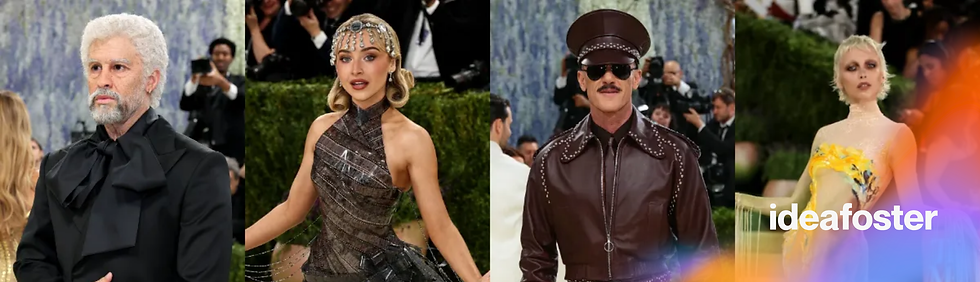
Alongside it, the AI Craft subcategories enter five craft Lions and recognize work where human creativity and AI achieve ideas that neither would reach alone, with AI in service of the idea. Cannes didn't ban AI or pretend it doesn't exist: it opened a space where using it is legitimate, but visible. We saw the same logic when AI crashed the Met Gala 2026: same shift, different arena, same question.
The question shifted from "did you use AI?" to "did AI genuinely change the outcome?".
Today, on the festival's opening day, Marcel Marcondes, Global CMO of AB InBev and Creative Marketer of the Year, opened the Lumière Theatre with an argument that reinforces exactly that: sustained creativity as a business strategy is what separates brands that last. The first awards of the day were handed out across seven categories, and entries dropped 25% versus 2025 following the introduction of stricter rules. The signal is clear: Cannes doesn't want more volume, it wants more judgment.
2. Authorship moved upstream
AI and creativity: credit no longer lives in execution
For decades, authorship lived in execution: who drew it, who filmed it, who wrote it. AI collapsed the cost of executing. Today anyone can generate a decent image in seconds. And so execution, on its own, stopped proving anything.
What didn't get cheaper is something else entirely: the judgment to know what's worth making, the intention that gives it meaning, the taste to discard fifty versions and keep one. Authorship moved up a level, toward direction, not the keyboard. And that's exactly what AI Craft rewards: craft, artistry and intention.
3. What makes a process genuinely yours
Your fingerprint is in the decisions, not the keystrokes
A process is yours not because no machine touched it, but because no one else would have made the same calls. The questions you asked, what you rejected, the standard you refused to lower, the problem you chose to solve. No prompt replicates that.
The teams that will win at Cannes 2026 and beyond won't be the ones who used the most AI, or the least. They'll be the ones who used it with such clear intention that the outcome could only be theirs. AI amplifies judgment. It doesn't invent it.
What does this mean for you?
You don't need a Cannes badge for this to land on your desk. If you create anything, content, products, brand, strategy, the authorship question has already arrived.
The bad news: "I used AI" stopped being a differentiator. Everyone uses it. The good news: your judgment, your taste, your intention don't ship inside any model.
The trick isn't using more AI or less. It's being so clear on what you want that the result carries your fingerprint.
Three moves to make the process yours:
Define your judgment before you open the tool: without a clear hypothesis, AI just returns averages.
Edit with a firm hand: your value is in what you discard, not what you generate.
Document the why: if you can explain every decision, the outcome is unmistakably yours.
The challenge: turning insight into competitive advantage
AI lowered the cost of producing. It didn't lower the cost of having judgment. Right there, exactly there is your edge and your brand's.
At ideafoster we help teams build creative processes where technology amplifies judgment instead of diluting it.
Frequently Asked Questions
1. What is the Creative Brand Lion at Cannes 2026?
It's a new award recognizing brands that use creativity strategically across the whole organization to achieve sustained growth. It rewards the systems, cultures and capabilities that make creative excellence consistently possible, not a single standout campaign.
2. What are the AI Craft subcategories?
New subcategories within the Design, Digital Craft, Film Craft, Industry Craft and Creative Data Lions. They recognize work where human creativity and AI combine to achieve ideas that neither would reach alone, with AI in service of the idea, not the other way around.
3. When is Cannes Lions 2026?
June 22–26, 2026, in Cannes, France. It's the world's most important creativity festival and sets the industry agenda for the rest of the year.
4. If I use AI, is the work still mine?
Yes — as long as authorship lives in your decisions: what problem you chose, what you discarded, what standard you applied. The tool executes; the author is whoever directs with intention.


Comments