When AI design kills conversion: Why you need human judgment in 2027


TL;DR
Your brain flags 'AI design' before you can name it. In 2026 a phenomenon emerged that now has a name: the ChatGPT flyer epidemic. The consequence isn't aesthetic — it's economic. AI-generated creatives can lift click-through rates by 12% while dropping purchase intent by 14%. The difference between using AI well and using it badly isn't the price of the tool. It's the judgment of whoever decides what to generate with it.
At the end of this post you'll find how to act on this without losing rigor.
Introduction
You received a flyer on WhatsApp. Or spotted it on Instagram. Within half a second something felt off: colors that almost work, a font that nearly fits, an image that looks like a stock photo from the future but doesn't feel real. You didn't know why, but you knew AI made it. That's AI design killing conversion in real time, not because of what it shows, but because of what it signals.
1. Your brain spots it before you can name it
The uncanny valley isn't just for robots

The uncanny valley was described by roboticist Masahiro Mori in 1970: things that are almost-human trigger instinctive rejection precisely because they're almost. The same mechanism applies to design. An AI-generated flyer has correct proportions, coherent color palettes, readable type. What it lacks is the intention behind each decision. The human eye, trained over decades of cultural exposure to visual communication, detects that absence before it can process it consciously.
Research on visual trust shows that users form a first impression of a design's credibility in just 50 milliseconds. Materials showing generative AI signals, particularly in typography and layout composition, show up to a 4x drop in initial trust compared to human-designed equivalents at the same quality level. This isn't subjective: it's neurological.
A new sense the market forced us to develop
Over the past two years, something beyond the instinctive reflex is happening: we're actively training that instinct. Designers, marketers, regular social media users, many can now point and say 'that's AI' before they finish looking at the image. Mass exposure to generated content is quietly building a new cognitive skill. Like the sommelier who learns to identify a wine by its color before smelling it, or the musician who hears a knockoff instrument in three chords. The sommelier took years. We're building that same filter in months. It's one of the fastest behavioral adaptations technology has ever triggered in humans, and a signal of exactly what's at stake when a brand decides to ignore it entirely.
2. The ChatGPT flyer epidemic: when every feed started looking the same
The trend that already has a name
In 2025, a pattern emerged across social networks: small businesses, independent artists and entrepreneurs publishing materials generated entirely by AI. Event flyers, course covers, opening announcements. Technically polished. Generically identical. Audiences started tagging them in comments: 'made with AI,' 'classic ChatGPT,' 'Canva AI template.' The pushback wasn't against the technology. It was against the absence of identity.
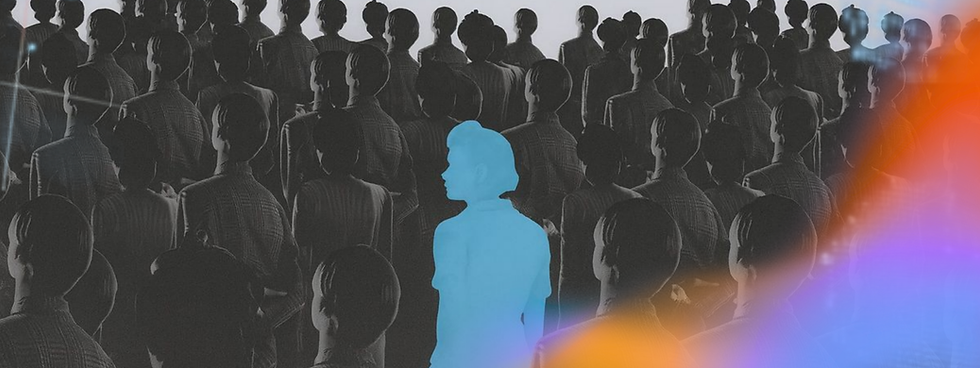
What the phenomenon exposed is that audiences have trained their eyes. Like banner blindness in the 2000s, when users developed an automatic filter for display ads and stopped seeing them, something similar is emerging with generic AI design in 2026. Recognition is instant. And recognition kills conversion, because trust requires specificity, not technical perfection. When your audience can name your tool before reading your message, you've already lost the sale.

When your audience can name your tool before reading your message, you've lost the conversion.
3. The invisible cost nobody is calculating
The paradox of 'free' AI design that costs you more
The data exists and it's uncomfortable. Analysis of digital creatives in e-commerce campaigns shows that assets with visual signals of AI generation can show up to 12% higher CTR than average, but up to 14% lower final conversion rates. More clicks, fewer sales. The explanation is consistent with the uncanny valley: the design draws attention with its polished look but creates cognitive friction at the decision moment. The brain detects the authenticity gap and hesitates.
The real problem is that most teams measure production cost, time saved, designer budget not spent, but not the conversion opportunity cost. If you save 3 hours of design work but lose 14% conversion on a campaign with 1,000 leads, the real calculation was never done. This isn't an argument against using AI in design. It's an argument for measuring the right variable.
4. What to delegate to AI, what to keep human, and how to decide
Human judgment isn't the opposite of AI: it's the filter that makes AI useful
The Baobad case:
Baobab is a Colombian fashion brand that works with local artisans. When they started using AI for their communications, the first outputs had solid technical quality but lost the artisanal and territorial identity their customers were buying for. Their Instagram conversion rate dropped 19% in the month they published fully AI-generated material. There was no explicit complaint. Their audience simply stopped buying. What failed wasn't the tool, it was the input. There was no clear brand definition guiding what to generate. AI produced something visually correct and emotionally empty.

The critical distinction isn't 'AI yes or AI no.' It's which layer of design AI enters and with what human judgment behind it. There are tasks where AI multiplies human judgment: variations of an already-validated element, visual copy A/B tests, first drafts a designer iterates on. And tasks where replacing human judgment destroys value: defining your brand palette from scratch, deciding which image communicates the right emotional tone, setting the visual hierarchy for a new message. Laura Corredor, graphic designer at ideafoster, frames it as a practical filter: use AI to explore within limits you've already defined. Without that prior decision about what to communicate, to whom and why, the output is technically correct and strategically empty.
AI amplifies what's already there. Give it brand judgment and it amplifies that. Give it nothing and it amplifies the void.
What does all this mean for you?
That using AI in design isn't the critical decision. The critical decision is where in the process it enters and with how much human judgment behind it. The brands winning on conversion in 2026 aren't the ones avoiding AI, they're the ones using it inside an already-defined brand system.
The competitive advantage in design is no longer having the best software or the fastest designer. It's having the clearest judgment about what your brand communicates and how you want people to feel when they encounter it. That judgment doesn't come from the tool. It comes from whoever knows who they're communicating to and why.
The right question before opening any generative design tool is: what emotion do I want this to generate, who specifically am I speaking to, and what is the single message that needs to land? With those three answers as prompt input, AI produces something useful. Without them, it produces something generic.
Three moves to stay ahead:
Audit your current materials: identify how much is unedited AI output and compare its actual conversion rate against creatives with human editorial judgment behind them.
Define your brand system first: colors, emotional tone, typography. That system is the human input that makes AI produce something recognizably yours instead of something generic.
Measure the right variable: not CTR, but final conversion rate and cost per acquisition, by campaign and by creative type.
The challenge: turning ideas into competitive edge
Brand judgment doesn't improvise and can't be delegated. It's built. And building it requires knowing what your brand communicates, who it speaks to and how you want people to feel when they encounter it. Without that foundation, no tool, however powerful, will generate sustained conversion.
At ideafoster we help teams build that judgment before they need it urgently. If you're reviewing your visual content strategy for 2027, contact us now and we'll build it together.
Frequently Asked Questions
1. Is using AI for design always a bad idea?
No. AI is an excellent tool for accelerating processes inside an already-defined brand system. The problem arises when it's used to make identity decisions that require human judgment. Using it for variations, A/B tests or first drafts that a team iterates on generates real value. Publishing its raw output as brand communication, without human editing, is where conversion risk appears.
2. How do I know if my design looks AI-generated?
The clearest signal is if someone outside your team can identify the tool before reading the message. Other signals: fonts that almost fit your brand tone, visually correct compositions without clear hierarchy, images that look perfect but don't connect emotionally. Practical test: show it to someone from your target audience and ask how it makes them feel, not what they see.
3. Which metrics should I check to know if my design is affecting conversion?
Compare CTR versus final conversion rate by creative type. If CTR is high but conversion is low, the design is attracting clicks but creating friction at the decision moment. The second indicator is cost per acquisition: if it rose without a change in spend, check whether it coincides with a shift in creative type. You can also run specific A/B tests of human-judged versus raw AI creative.
4. What is the minimum I need to define before using AI to design?
Three things: what emotion you want the design to generate (not which colors, but how the viewer should feel), who specifically you're speaking to (not your general audience), and what single message needs to land. With those three definitions as prompt input, AI output has a much better chance of being useful and editable rather than generic and forgettable.


Comments